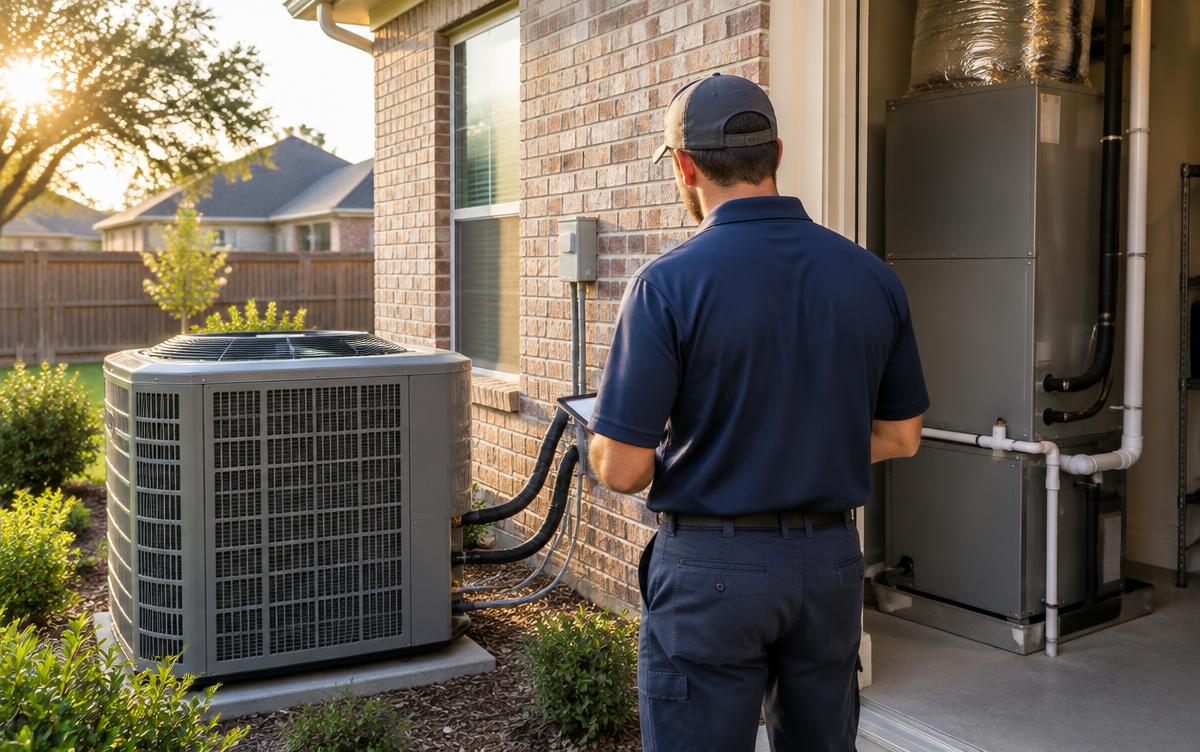
Summer puts heating and cooling equipment to the test across East Texas. By September, homeowners often have a much clearer idea of whether their current system can handle another year or whether it is time to consider a new HVAC installation.
If your air conditioner struggled through summer, required repeated repairs, or could not maintain comfortable temperatures, early fall can be a good time to evaluate your options. Planning ahead also means you are less likely to make a rushed decision after a complete system failure.
Why Consider HVAC installation in September?
September weather in East Texas can still be warm, but the most intense part of summer is beginning to pass. That makes it a useful time to look at the performance of your current HVAC system.
Think back over the past few months. Did the AC run almost constantly? Were certain rooms consistently warmer than others? Did you have to schedule multiple repairs?
These problems do not automatically mean you need a new system, but they are good reasons to have the equipment evaluated.
Signs Your Current HVAC System May Be Ready for Replacement
Age is only one factor when deciding whether to install a new system. Performance matters just as much.
Common warning signs include:
- Frequent HVAC repairs
- Rising energy bills
- Uneven temperatures throughout the home
- Weak airflow from vents
- An AC that runs for long periods without reaching the set temperature
- Excessive noise during operation
- Equipment that has become increasingly unreliable
A professional HVAC technician can inspect the system and help determine whether another repair makes sense or whether replacement could provide better long-term value.
Proper HVAC Sizing Matters
Choosing a new HVAC system is not as simple as buying the largest unit available.
An oversized system may turn on and off too frequently, while an undersized system may run continuously trying to keep up with East Texas temperatures. Both situations can reduce comfort and efficiency.
A proper HVAC installation should take into account factors such as your home's size, insulation, windows, layout, ductwork, and cooling needs.
Correct sizing helps the new system maintain more consistent temperatures without unnecessary strain.
Don't Forget About Your Ductwork
Installing new equipment without checking existing ductwork can limit the performance of the new system.
Leaks, damaged ducts, restrictions, or poorly designed ductwork can lead to weak airflow and uncomfortable rooms. Older East Texas homes and properties that have been expanded over the years may be especially likely to have ductwork that no longer matches the home's layout.
Before installation, ask whether the existing ducts are in good condition and properly sized for the new equipment.
Consider Your Heating Needs Too
An HVAC installation should address year-round comfort, not just air conditioning.
Depending on the property, a new system may include a heat pump, furnace, central AC system, or another heating and cooling setup. Looking at both heating and cooling needs now can help you prepare before colder temperatures arrive.
What to Expect From a Professional Installation
A quality HVAC installation should involve more than simply removing one unit and replacing it with another.
Your contractor should evaluate the property, recommend appropriately sized equipment, review installation requirements, complete the installation, and test the finished system.
Before the job is complete, you should also understand how to operate your thermostat, replace filters, and maintain the new equipment.
Plan Before Your Current System Fails
There is rarely a convenient time for an HVAC system to stop working. Planning a replacement while your current equipment is still operating gives you more time to compare options and make an informed decision.
Free State Heating & Cooling provides HVAC installation and replacement services for homes and businesses throughout East Texas. If your system struggled through another Texas summer, September is a good time to have it evaluated and determine what makes sense before the next season.